 941-404-2564
Table of Contents
- What Is Normal Water Pressure and Why It Matters
- How to Check Water Pressure in Your House
- Common Causes of Low Water Pressure
- How to Adjust Water Pressure Regulator Settings
- DIY Fixes You Can Try Before Calling a Professional
- When to Call a Plumber for Low Water Pressure
- Smart Home Monitoring Solutions for Water Pressure
- Frequently Asked Questions
Last Updated: September 1, 2026
What Is Normal Water Pressure and Why It Matters
Normal household water pressure typically ranges from 40 to 80 pounds per square inch (PSI), with most homes operating comfortably between 50 and 70 PSI (the EPA). Pressure below 40 PSI causes weak showers, slow-filling bathtubs, and underperforming appliances. Low pressure signals an underlying plumbing issue that deserves prompt attention, as problems can escalate from simple fixes like clogged aerators to serious failures like pressure regulator valve breakdown.
At SWFL 24 Rooter, we’ve handled many pressure complaints. Homeowners often wait weeks before investigating, allowing minor issues to worsen. A small leak at 40 PSI can eventually damage your foundation or create mold growth. Water pressure also affects efficiency: low pressure forces fixtures to work harder and strains pumps, while high pressure stresses pipes and causes premature failure. The 40-80 PSI range balances performance with system longevity.
How to Check Water Pressure in Your House
Testing your water pressure takes less than five minutes with a simple pressure gauge (under thirty dollars at any hardware store). Attach the gauge to an outdoor spigot or the lowest faucet in your home, turn the valve fully open, and read the PSI. Record readings at different times of day, since pressure fluctuates based on municipal demand and usage patterns.
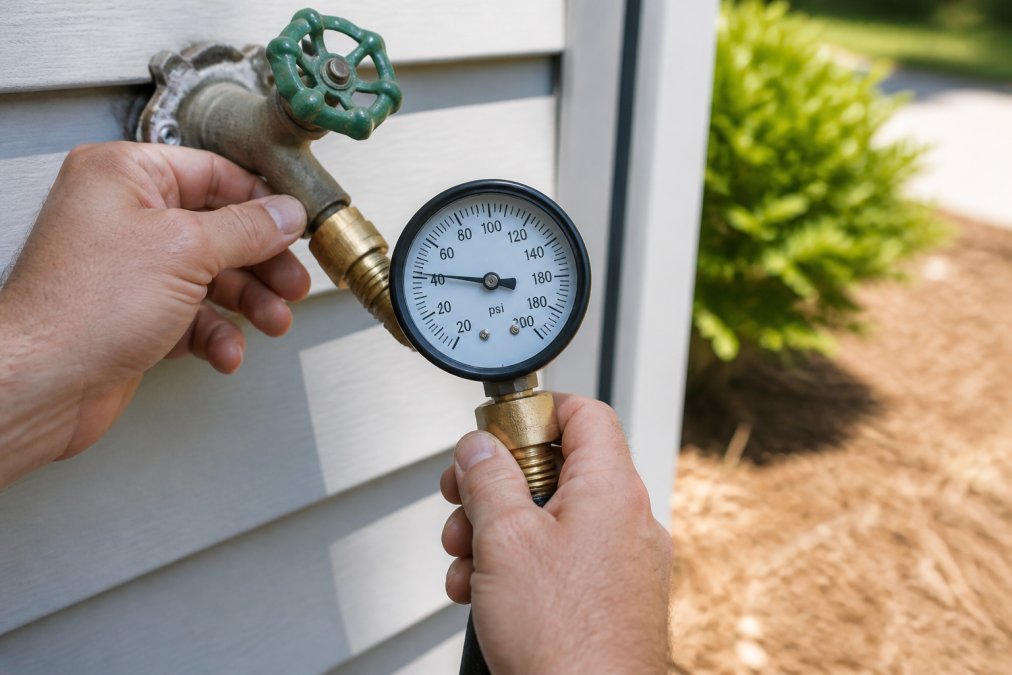
Consistent readings below 40 PSI confirm low water pressure; above 80 PSI indicates high pressure. Widespread low pressure points to a main line problem, shutoff valve issue, or pressure regulator failure. Isolated low pressure at specific fixtures suggests a clogged aerator or localized obstruction. Document your readings before contacting a plumber, this information helps professionals narrow down the cause and saves diagnostic time.
Common Causes of Low Water Pressure
Low water pressure stems from blockages in fixtures or pipes, equipment failures like pressure regulators or well pumps, and supply-side issues from your water main or municipal system.
Clogged Aerators and Mineral Buildup
The aerator is the small screen at your faucet tip that mixes air with water. Mineral deposits, sediment, and corrosion accumulate over time, restricting flow. This is the most common reason for low pressure at individual fixtures and the easiest to fix. Hard water accelerates buildup because calcium and magnesium deposits accumulate faster.
Cleaning an aerator takes minutes: unscrew it, soak in white vinegar for thirty minutes, scrub with an old toothbrush, rinse, and reinstall. If cleaning doesn’t work, replace the aerator (three to eight dollars, installs by hand). You’ll notice pressure drops at one sink or shower while other fixtures maintain normal flow.
Faulty Pressure Regulator Valve (PRV)
The pressure regulator valve controls incoming water pressure from your main line, reducing it to safe household levels. When the PRV fails, pressure either drops significantly or spikes dangerously. PRVs typically fail due to internal corrosion, sediment blockage, or wear after 10-15 years of operation (aspe.org).
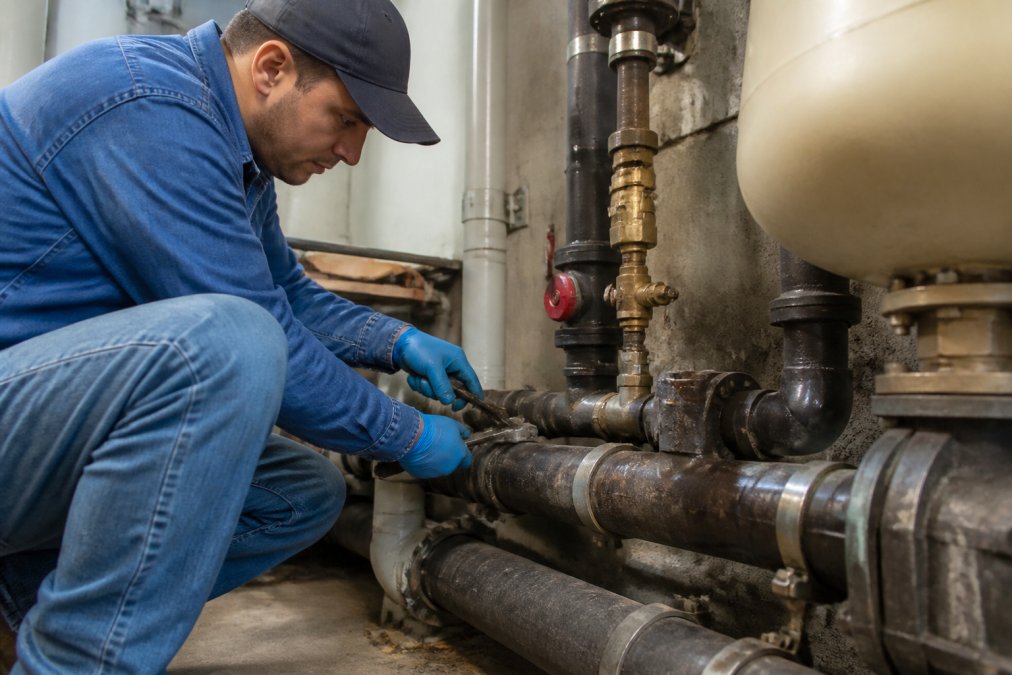
If your gauge shows pressure consistently below 40 PSI, the PRV may be stuck closed. The PRV is usually located near your main shutoff valve, often in the basement or crawl space. Adjusting or replacing a pressure regulator valve requires specific tools and knowledge of local plumbing code, improper adjustment can damage your system or violate code requirements. This is where professional help from SWFL 24 Rooter becomes essential.
Leaking Pipes and Water Damage
Leaks in your plumbing infrastructure reduce available pressure throughout the system. Common leak locations include joints where pipes connect, areas with corrosion, and sections under stress from water hammer. You might notice low pressure combined with wet spots in your basement, crawl space, or yard. Hidden leaks inside walls require professional camera inspection to locate without unnecessary digging or wall removal.
Well Pump and Pressure Tank Issues
Homes with private wells rely on a pump and pressure tank to maintain consistent pressure. When either component fails, pressure drops dramatically. Well pump problems develop gradually as the pump loses efficiency. Pressure tank issues occur when the tank loses its air charge, the air pocket inside helps regulate pressure. You might notice pressure that drops when multiple fixtures run simultaneously, then recovers when demand decreases.
Testing a pressure tank involves checking the air charge with a tire pressure gauge at the tank’s air valve. If the reading is zero or significantly low, the tank needs air. If the pump is failing, replacement is necessary.
Municipal Water Supply and Shutoff Valve Problems
Low water pressure sometimes originates outside your home in the municipal water main or at the meter. Contact your water utility to ask if they’re aware of pressure issues in your area. Your home’s main shutoff valve controls all water entering the house. If partially closed or stuck, it restricts flow to the entire system. The shutoff valve is usually located near the water meter. Check that the valve handle is fully open (parallel to the pipe, not perpendicular). A stuck shutoff valve is dangerous because it prevents you from cutting off water during emergencies, don’t force it, as corrosion can break the internal mechanism.
How to Adjust Water Pressure Regulator Settings
If your pressure regulator valve is functioning but delivering pressure outside the ideal 40-80 PSI range, adjustment may be necessary. The PRV has an adjustment screw or bolt on top. Turning it clockwise increases pressure; counterclockwise decreases it. Each full turn usually changes pressure by 10-15 PSI (aspe.org). Start with small adjustments (a quarter turn at a time) and retest after each adjustment.
Many homeowners find this task too risky. Improper adjustment can cause pressure to spike above 100 PSI, stressing pipes and increasing leak risk, or drop below 40 PSI, worsening the problem. Adjusting a pressure regulator may also violate local plumbing codes. SWFL 24 Rooter’s licensed technicians understand local code requirements and can adjust your PRV safely while ensuring compliance. If adjustment doesn’t resolve the problem, replacement is the next step.
DIY Fixes You Can Try Before Calling a Professional
Before scheduling a service call, try these simple troubleshooting steps.
Clean or Replace Aerators
Check every faucet in your home, testing pressure at each one. If only one or two fixtures show low pressure, the problem is isolated to those aerators. Unscrew each aerator, soak in white vinegar for 30 minutes, scrub gently with an old toothbrush, rinse, and reinstall.
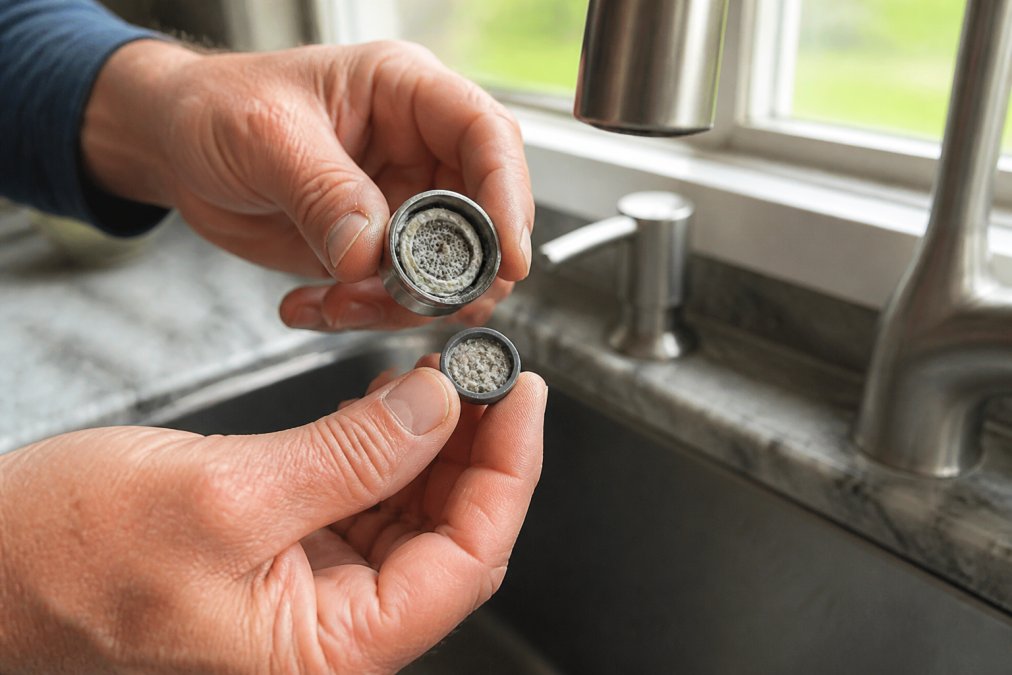
If cleaning doesn’t work, replace the aerator (under ten dollars, installs by hand).
Check Shutoff Valves
Locate your home’s main shutoff valve, typically near the water meter or where the main line enters your house. Verify that the handle is fully open (parallel to the pipe). If perpendicular, gently turn it to open fully, then retest your water pressure. Also check shutoff valves under individual sinks. If a valve won’t turn easily, don’t force it, corrosion can break the internal mechanism.
Inspect for Visible Leaks
Walk through your basement, crawl space, and around the exterior looking for wet spots, water stains, or pooling water. Visible leaks indicate a burst or corroded pipe. Note the location and call a professional immediately. Listen for unusual sounds in your walls or under the floor, a hissing or dripping sound often indicates a hidden leak. Professional camera inspection can pinpoint exact locations without invasive digging.
When to Call a Plumber for Low Water Pressure
If pressure readings are consistently below 40 PSI after checking aerators and shutoff valves, or if pressure dropped suddenly without obvious cause, contact a licensed plumber. If low pressure affects your entire home and you suspect a pressure regulator, well pump, or main line issue, professional diagnosis is necessary. Call immediately if you notice low pressure combined with discolored water, unusual odors, or visible leaks, these signs indicate contamination risk or serious plumbing failure.
SWFL 24 Rooter’s 1-hour response guarantee means you won’t wait days for diagnosis. Our technicians arrive quickly with pressure gauges, camera inspection equipment, and diagnostic tools to identify the problem and explain your options.
Smart Home Monitoring Solutions for Water Pressure
Modern smart home technology includes water pressure monitoring systems that alert you to problems before they become emergencies. These devices attach to your main water line and continuously monitor PSI, sending notifications to your phone if pressure drops unexpectedly or spikes dangerously.
Smart water monitors catch slow leaks early by detecting gradual pressure changes and alert you to pressure regulator failure immediately. Some systems integrate with your home automation platform, allowing remote monitoring when you’re away. Installation typically requires attaching the monitor to a main line access point near your shutoff valve. Smart monitoring is particularly valuable for homes with well systems, where pressure tank failure can develop gradually, and for older homes with aging plumbing infrastructure.
Low water pressure at home is frustrating, but most causes are preventable or easily correctable. Starting with simple checks, aerators, shutoff valves, visible leaks, resolves many cases without professional help. When those steps don’t work or pressure dropped suddenly without obvious cause, professional diagnosis becomes necessary. SWFL 24 Rooter provides expert water pressure diagnostics with our guaranteed 1-hour response time. Our licensed technicians use advanced pressure testing and waterproof camera inspection to identify exactly what’s causing your problem, then explain your repair options clearly. Contact us to schedule an inspection and restore your water pressure to normal levels.
Frequently Asked Questions
Why would my house suddenly have low water pressure?
Sudden low water pressure typically stems from three main sources: a closed or partially closed shutoff valve, a failed pressure regulator valve (PRV), or a clogged aerator filled with mineral buildup and sediment. Less commonly, a leak in your plumbing infrastructure, issues with your municipal water main, or problems with your well pump and pressure tank can cause sudden drops. The fastest way to identify the cause is to check if the problem affects all fixtures or just one, single-fixture issues usually point to aerator clogs, while whole-house problems suggest valve or regulator failure.
How can I increase the water pressure in my house?
Start with simple fixes: clean aerators on affected faucets, verify all shutoff valves are fully open, and check for visible leaks. If pressure is low throughout the house, locate your pressure regulator valve (usually near the water meter) and adjust it by turning the adjustment screw clockwise to increase PSI. Most homes perform best between 40-60 PSI. If these steps don’t work, the regulator may be faulty and need replacement, or a deeper issue like pipe damage or municipal supply problems may require professional diagnosis with a pressure gauge and camera inspection.
Is 40 psi water pressure too low?
Forty PSI is at the lower boundary of acceptable residential water pressure. Most homes operate comfortably between 40-80 PSI, with 50-60 PSI being ideal for balanced flow and fixture performance. At 40 PSI, you may notice weak shower flow and slow filling of tubs and toilets, especially if multiple fixtures run simultaneously. If your static pressure reads 40 PSI or below, adjusting the pressure regulator valve upward or addressing underlying causes like clogs, leaks, or regulator failure will improve performance and prevent long-term plumbing stress.
When should I call a professional plumber for water pressure issues?
Call a plumber if pressure remains low after cleaning aerators and checking shutoff valves, if the problem affects your entire home and you’re unsure how to adjust the regulator safely, if you suspect a leak or pipe damage, or if your well pump or pressure tank is involved. Professional plumbers use pressure gauges and waterproof camera inspection systems to diagnose hidden issues like sediment buildup in pipes, corrosion, or regulator failure. For emergency situations, especially in commercial properties, a 24/7 service with fast response times ensures minimal downtime and prevents costly water damage.
This article was written using GrandRanker