 941-404-2564
Table of Contents
- Why Commercial Plumbing Maintenance Protects Your Bottom Line
- Signs Your Commercial Plumbing System Needs Immediate Attention
- Commercial Plumbing Maintenance Checklist by Frequency
- Hydro Jetting for Commercial Pipes: What It Does and When You Need It
- Preventative Plumbing Maintenance for Restaurants
- IoT and Smart Monitoring for Commercial Plumbing Systems
- Frequently Asked Questions
Last Updated: August 31, 2026
Why Commercial Plumbing Maintenance Protects Your Bottom Line
Commercial plumbing maintenance is the structured, ongoing practice of inspecting, cleaning, and servicing a building’s entire plumbing infrastructure to prevent failures before they become emergencies. At SWFL 24 Rooter, we respond to commercial plumbing calls around the clock, and the pattern is consistent: the most expensive repairs happen at facilities that skipped routine maintenance.
A burst pipe or sewer backup forces a business to close. Lost revenue, emergency labor rates, water damage remediation, and liability add up fast. Preventative maintenance eliminates most of those scenarios or catches them early when fixes remain manageable.
Commercial plumbing systems carry far more load than residential ones. Multi-unit buildings, restaurant kitchens, and office complexes cycle water through their systems hundreds of times daily, accelerating sediment buildup, pipe corrosion, and grease accumulation.
A well-structured commercial plumbing maintenance program delivers three core outcomes: downtime mitigation by catching failures before they shut down operations, regulatory compliance by keeping systems aligned with local plumbing codes and health department standards, and system longevity by extending the life of commercial piping, fixtures, and water heating equipment.
According to the U.S. Environmental Protection Agency’s WaterSense program, commercial and institutional facilities account for roughly 17 percent of all water use in the United States. Leaks and inefficiencies in commercial plumbing infrastructure represent significant preventable waste. Routine inspection and repair directly improve water efficiency, lowering utility bills and operational footprint.
Treating plumbing maintenance as an operating expense rather than a reactive cost is one of the clearest wins available to any facility manager.
Signs Your Commercial Plumbing System Needs Immediate Attention
Most plumbing failures don’t happen without warning. In commercial settings, warning signs often get attributed to other causes or ignored during busy operations.
Drain and Sewer Line Warning Signs
Slow drains are the most common early signal and the most commonly dismissed. A single slow drain might indicate a localized clog. Multiple slow drains across different areas almost always point to a sewer line issue downstream, a distinction that matters because the fix is completely different.
Watch for these specific indicators: gurgling sounds from floor drains or toilets after water is used elsewhere, sewage odors in bathrooms or utility closets, recurring backups in the same fixtures despite repeated clearing, water pooling around floor drains in mechanical rooms or kitchens, and visible root intrusion or ground settlement near exterior cleanout access points.
Sewer backups are particularly serious in commercial settings because they can contaminate food prep areas, trigger health code violations, and force immediate closure. A sewer line inspection using waterproof camera technology is the definitive diagnostic tool.
Water Heater and Backflow Prevention Red Flags
Water heater warning signs in commercial settings are often subtle. Inconsistent hot water supply, discolored water at the tap, or unusual sounds all suggest sediment buildup inside the tank. Left unaddressed, sediment flushing becomes necessary at minimum, and premature unit failure becomes likely.
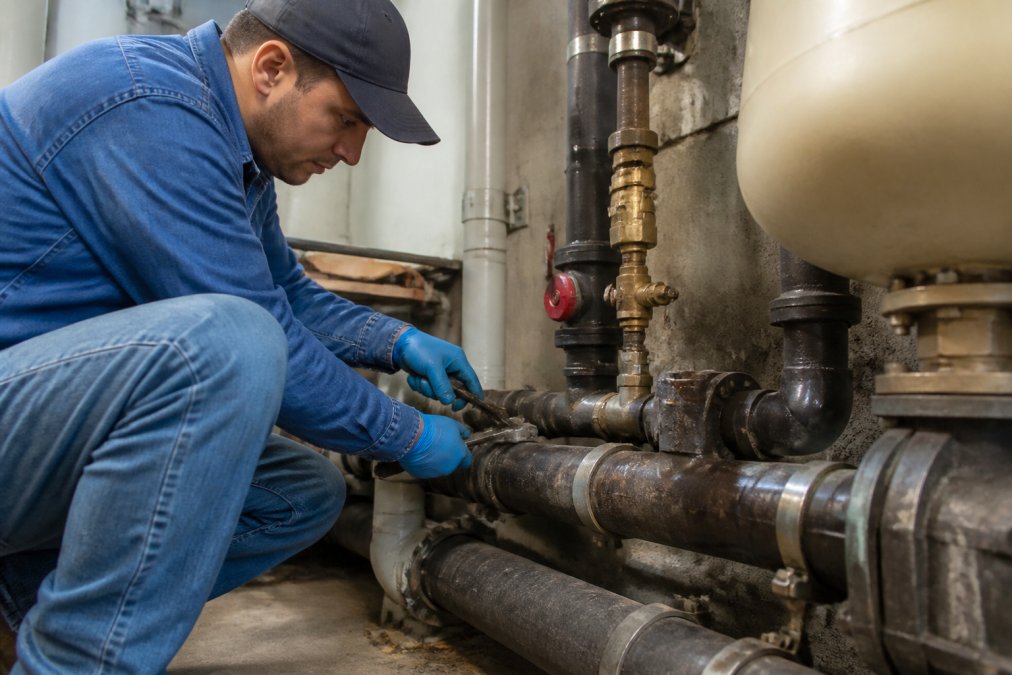
Backflow prevention devices protect the public water supply from contamination by preventing water from flowing backward into supply lines. These devices are required by plumbing code on virtually every commercial property and fail silently. The American Backflow Prevention Association’s testing guidelines recommend annual testing by a certified tester as the standard for commercial properties. A failed backflow preventer that goes undetected creates both a public health risk and significant compliance liability.
TPR valves on water heaters also require periodic testing. A temperature-pressure relief valve that’s stuck or corroded won’t open under dangerous pressure, creating a genuine safety hazard.
Commercial Plumbing Maintenance Checklist by Frequency
A reliable commercial plumbing maintenance checklist organizes tasks by frequency. Ad hoc maintenance misses things. A frequency-based schedule doesn’t.
Monthly Tasks
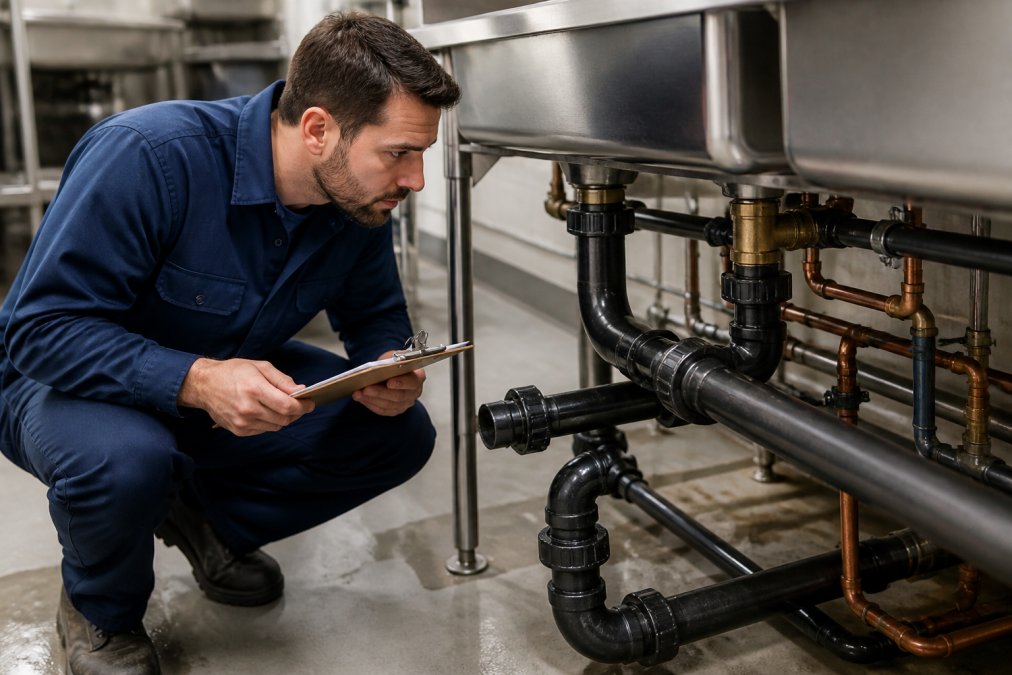
Monthly checks are fast, visual, and designed to catch early-stage problems before they develop. Assign these to your facilities team or schedule a brief monthly visit from your plumbing contractor.
- Inspect all visible pipes for signs of corrosion, moisture, or discoloration
- Test water pressure at key fixtures and compare against baseline readings
- Check all accessible shutoff valves to confirm they operate freely
- Inspect under-sink areas for slow drips or moisture accumulation
- Flush floor drains with water to maintain trap seals and prevent sewer gas entry
- Check grease trap levels in kitchen facilities and schedule pumping if within 25 percent of capacity
- Test any sump pumps for proper operation
- Inspect water pressure regulation equipment for accurate readings
| Task | Frequency | Who Performs It |
|---|---|---|
| Visual pipe inspection | Monthly | Facilities staff or plumber |
| Pressure check | Monthly | Facilities staff |
| Floor drain flushing | Monthly | Facilities staff |
| Grease trap inspection | Monthly | Facilities staff |
| Backflow preventer testing | Annual | Certified tester |
| Sewer line camera inspection | Annual | Licensed plumber |
| Water heater sediment flush | Annual | Licensed plumber |
| Hydro jetting (high-use drains) | Annual or as needed | Licensed plumber |
| TPR valve test | Annual | Licensed plumber |
| Pipe insulation check | Annual | Licensed plumber |
Quarterly and Annual Tasks
Quarterly tasks go deeper than monthly visual checks and typically require a licensed plumber.
Quarterly:
- Inspect and test backflow prevention devices
- Check water heater for sediment accumulation and anode rod condition
- Inspect all exposed pipe insulation for damage or gaps, particularly in unconditioned spaces
- Camera inspect high-use drain lines in kitchens or laundry facilities
- Test emergency shutoff valves building-wide
Annual:
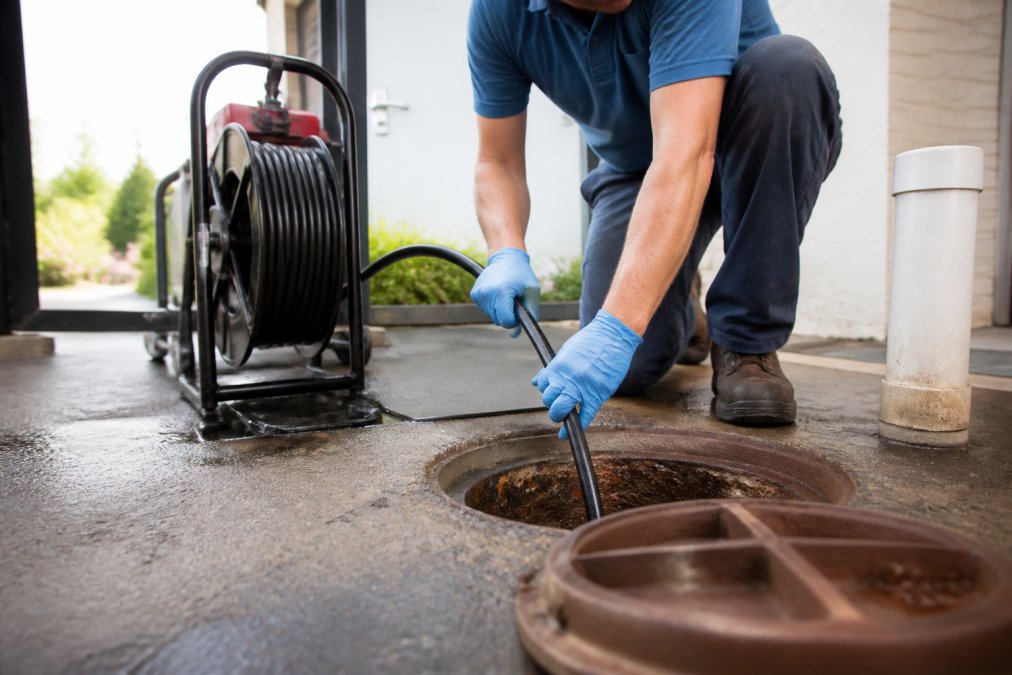
- Full sewer line inspection via camera to assess root intrusion, pipe condition, and buildup
- Complete water heater maintenance including sediment flushing and TPR valve test
- Hydro jetting of main drain lines as a preventative measure
- Cross-connection control audit to verify no unprotected connections exist between potable and non-potable water sources
- Full plumbing code compliance review against current local standards
- Pipe insulation audit for energy efficiency and freeze protection
The annual inspection is where most deferred maintenance gets discovered. Scheduling it proactively beats discovering problems during a failure.
Hydro Jetting for Commercial Pipes: What It Does and When You Need It
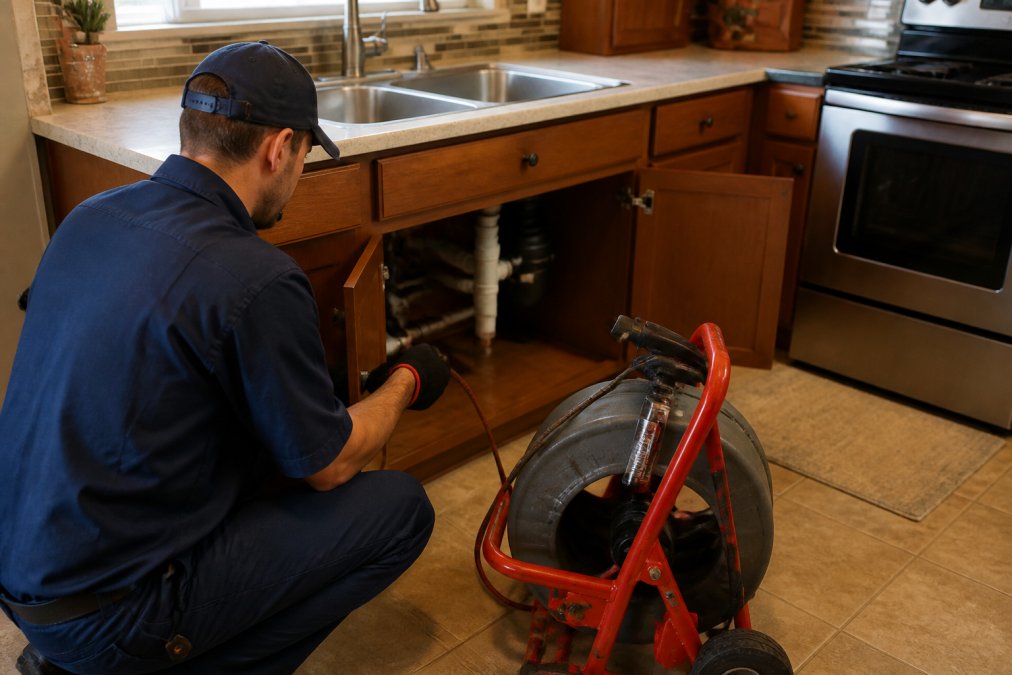
Hydro jetting uses high-pressure water, typically delivered at several thousand PSI, to scour the interior walls of commercial pipes and remove accumulated grease, scale, sediment, and debris. Unlike mechanical snaking, which punches a hole through a clog, hydro jetting clears the entire pipe diameter and leaves the walls clean.
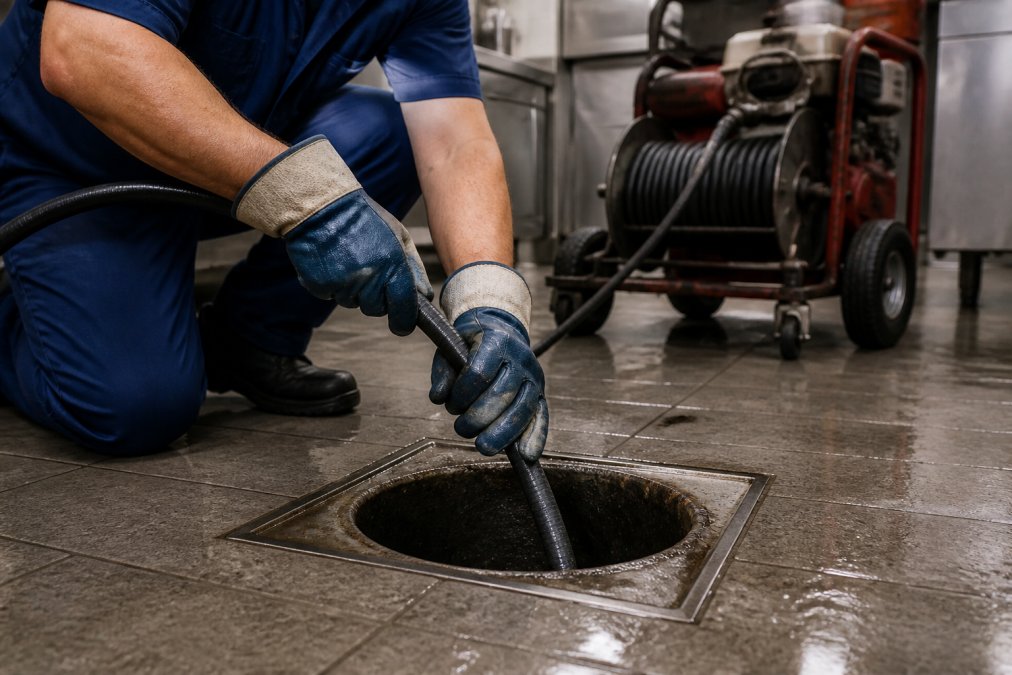
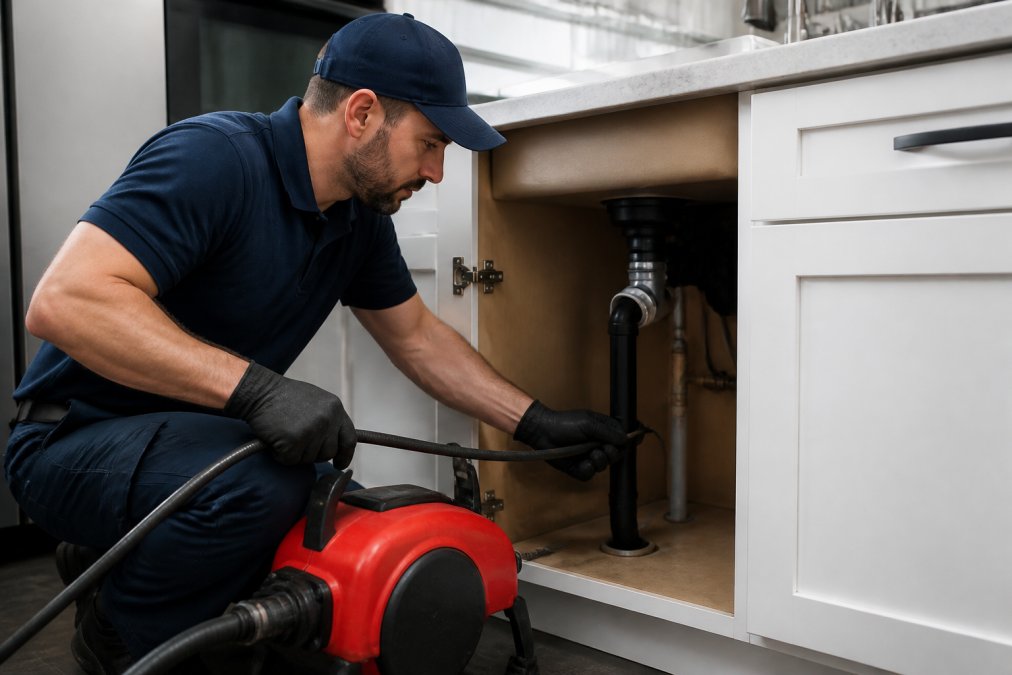
For commercial plumbing systems, this distinction is critical. A snake that punches through a grease clog in a restaurant kitchen drain provides temporary relief. Within weeks, remaining grease on the pipe walls catches new debris and the clog reforms. Hydro jetting removes the grease layer entirely, delivering long-lasting results.
When hydro jetting is the right call:
- Recurring clogs in the same drain line despite repeated snaking
- Slow drains across multiple fixtures on the same line
- Pre-inspection cleaning before a camera inspection to get a clear view of pipe condition
- Annual preventative maintenance on high-volume drain lines in restaurants, laundries, or food processing facilities
- After a sewer line inspection reveals significant buildup but no structural damage
Hydro jetting should always follow a camera inspection on older commercial piping. High-pressure water can worsen existing cracks or joint failures in deteriorated pipes.
Schedule hydro jetting as part of your annual commercial plumbing maintenance rather than waiting for a backup. Cleaning pipes before they clog is significantly less disruptive than emergency service during business hours.
Preventative Plumbing Maintenance for Restaurants
Restaurants operate under more plumbing stress than almost any other commercial property type. High-volume water use, constant grease production, and the consequences of a kitchen shutdown during service make preventative plumbing maintenance a genuine operational priority.
The biggest mistake restaurant operators make is treating plumbing maintenance as an emergency-only expense. By the time a kitchen drain backs up during dinner service, the cost is already compounding: lost covers, staff overtime, emergency service rates, and potential health code scrutiny.
Grease Trap Management
A grease trap is a plumbing device installed between kitchen drains and the municipal sewer system. It intercepts fats, oils, and grease before they enter the sewer line, where they would otherwise accumulate, harden, and eventually cause blockage or sewer backup.
Grease traps require regular pumping and cleaning. How often depends on cooking volume, trap size, and local regulations. The standard industry rule is the “25 percent rule”: pump when the trap is 25 percent full of grease and solids. Many municipalities codify this directly into their pretreatment requirements.
Neglected grease traps cause three compounding problems: sewer line blockages that back up into the kitchen and trigger immediate closure, FOG violations (fats, oils, and grease) under local pretreatment ordinances which carry fines, and odor complaints from hydrogen sulfide gas produced by decomposing grease.
Hydro jetting the drain lines leading to and from the grease trap is a highly effective complement to regular pumping, removing grease already coating pipe walls and reducing emergency call frequency.
Regulatory Compliance and Local Plumbing Codes
Commercial plumbing systems are subject to multiple layers of regulation. The International Plumbing Code maintained by the International Code Council provides the model framework most jurisdictions adopt, but local amendments frequently add stricter requirements. Restaurants face additional oversight from local health departments and, in many areas, from municipal pretreatment programs.
Key compliance areas for commercial properties include backflow prevention (most jurisdictions require annual testing by a state-certified tester and submission of test reports to the local water authority), grease trap maintenance records (health departments often require documented pumping logs going back one to three years), cross-connection control (any connection between potable water and equipment requires an approved air gap or backflow preventer), and permit requirements (major plumbing repairs or modifications require a permit and inspection by the local authority having jurisdiction).
An annual compliance review by a licensed plumber is the most reliable way to stay ahead of violations.
Operating a commercial kitchen with an overdue grease trap or an untested backflow preventer is not just a maintenance gap. It is a code violation that can result in fines, failed inspections, and in serious cases, mandatory closure. Document everything.
IoT and Smart Monitoring for Commercial Plumbing Systems
Smart monitoring represents the most significant shift in commercial plumbing maintenance in the past decade. IoT-enabled sensors installed on pipes, water meters, and fixtures can detect leaks, abnormal pressure fluctuations, and unusual flow patterns in real time, alerting facility managers before a small anomaly becomes a major failure.
Traditional maintenance relies on scheduled inspections and visible symptoms. Smart monitoring adds continuous, automated plumbing diagnostics between those inspections. A sensor that detects a slow drip behind a wall catches a problem that would otherwise go unnoticed for months.
What smart monitoring systems typically track: water flow rate anomalies that suggest a hidden leak or running fixture, pressure drops that indicate a pipe failure or valve issue, temperature readings on hot water lines to confirm water heater performance and flag Legionella risk zones, and usage patterns that identify unusually high consumption during off-hours.
For multi-unit apartment complexes and large commercial facilities, the ROI case is clear. Water damage from undetected leaks is among the most expensive property insurance claims. Early detection through continuous monitoring reduces both frequency and severity of those events.
Integrating smart monitoring with a commercial plumbing maintenance schedule creates a two-layer system: automated detection handles the between-inspection period, while scheduled professional visits handle the physical work that sensors can’t replace. As the EPA’s WaterSense for Commercial Buildings resources outline, leak detection and water efficiency improvements in commercial settings can meaningfully reduce water consumption and operating costs.
Smart plumbing sensors don’t replace scheduled maintenance. They extend its reach by flagging problems between visits, which is when most undetected failures actually develop.
Commercial plumbing failures don’t announce themselves with convenient timing. They happen during peak service hours, on weekends, and in the middle of the night. The facilities and restaurant operators who avoid those crises aren’t lucky; they run structured maintenance programs that catch problems early. SWFL 24 Rooter provides 24/7 commercial plumbing maintenance and emergency service, with a guaranteed one-hour response time and advanced hydro jetting and camera inspection technology to diagnose and resolve issues fast. If your facility is overdue for a drain inspection, grease trap service, or full commercial plumbing maintenance review, schedule your visit with SWFL 24 Rooter today.
Frequently Asked Questions
How often should commercial plumbing systems be inspected?
Most commercial properties benefit from a professional inspection at least once a year, with higher-traffic facilities like restaurants or apartment complexes scheduling inspections every six months. Monthly visual checks by facility staff cover basics like water pressure, visible leaks, and slow drains. Sewer line camera inspections and backflow prevention testing are typically annual tasks, though local plumbing codes may set specific requirements. Staying on a consistent schedule catches small issues before they become expensive emergency repairs.
What does commercial plumbing maintenance include?
Commercial plumbing maintenance covers routine inspection of pipes, fixtures, and drains; water heater and boiler efficiency checks; TPR valve testing; backflow prevention device testing; grease trap cleaning; sediment flushing; and sewer line inspection. It also includes leak detection, water pressure regulation checks, and pipe insulation assessments. For restaurants and multi-unit properties, drain cleaning and grease trap management are especially critical. A complete maintenance plan addresses both reactive repairs and scheduled preventative tasks to protect plumbing infrastructure long-term.
What are the benefits of a preventative plumbing maintenance plan?
A preventative maintenance plan reduces emergency repair costs, extends system longevity, and limits operational downtime. For commercial properties, unplanned plumbing failures can disrupt business for hours or days. Regular drain cleaning, sewer line inspection, and water heater maintenance catch deterioration early. Facilities that maintain consistent schedules also stay ahead of compliance standards under local plumbing codes, avoiding fines or failed health inspections. The cost-benefit analysis consistently favors prevention over emergency response for any commercial property manager.
What makes hydro jetting more effective than standard drain snaking?
A drain snake physically breaks through a clog but leaves residue on pipe walls. Hydro jetting uses high-pressure water to scour the interior of commercial pipes, removing grease buildup, mineral deposits, and debris that snaking misses. For restaurants and high-use facilities, this produces longer-lasting results and reduces how often drain cleaning is needed. It also works across a wider range of blockage types. A camera inspection before jetting confirms the pipe condition so the right method is applied safely.
This article was written using GrandRanker